The cuba flag waves proudly over the beautiful island nation, symbolizing a rich history of struggle and triumph. It’s more than just a piece of cloth; it’s a story of people fighting for freedom, coming together in unity, and looking forward to brighter days. Wow, imagine how a simple design can hold so much meaning! As we dive into this article, you’ll see why the cuba flag inspires so many, from its bold colors to the star that shines like a guiding light. Let’s explore its details, keeping an optimistic view on how it represents Cuba’s enduring spirit.
Introduction to the Cuba Flag
When you think about the cuba flag, what comes to mind? For many, it’s those striking blue and white stripes with a red triangle and a lone white star. This flag, often called the Lone Star Flag or Estrella Solitaria in Spanish, stands as a powerful emblem for Cuba. Adopted officially on May 20, 1902, it has flown high through wars, revolutions, and peaceful times, always reminding Cubans of their shared dreams. It’s designed with care, each part telling a part of Cuba’s story.
Cuba, that vibrant Caribbean island, has a flag that’s simple yet profound. Don’t you love how flags can unite people? The cuba flag does just that, fluttering in the breeze at schools, government buildings, and even during lively festivals. In this section, we’ll set the stage for understanding its importance. From its creation in the 19th century to its role today, the cuba flag embodies hope. As we move forward, remember, it’s not just about the past; it’s about inspiring future generations to keep the spirit alive.
Transitional phrases like “moving on” help us appreciate how the cuba flag connects history to the present. Interestingly, while some flags change over time, this one has stayed true to its roots, showing Cuba’s steadfast nature. Hey, that’s something to cheer about!
The Design of the Cuba Flag
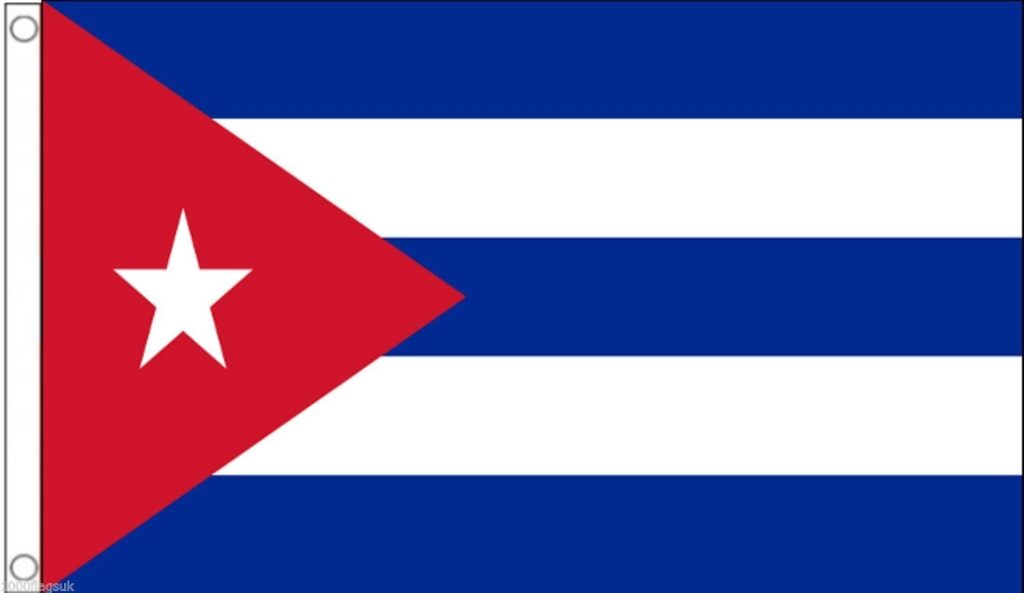
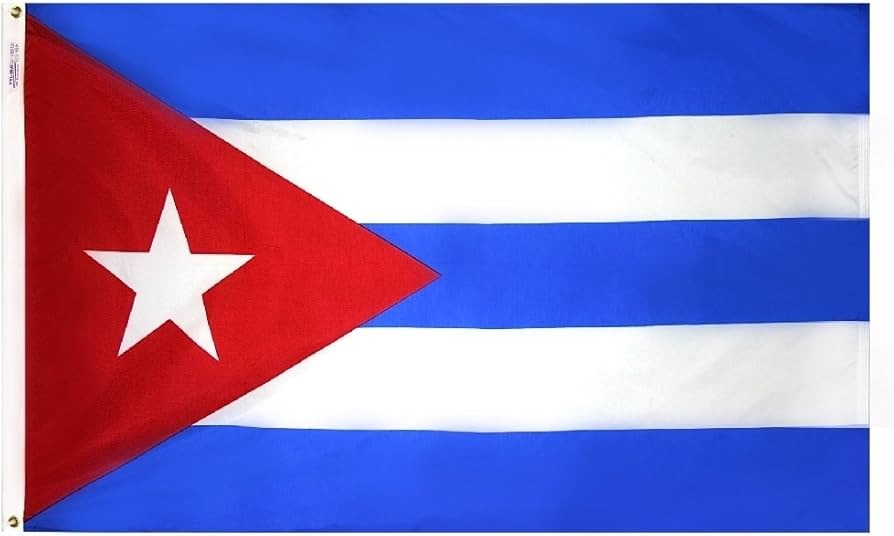
Let’s break down the look of the cuba flag. It’s a rectangle with a width-to-length ratio of 1 to 2, making it twice as long as it is wide. Picture this: three horizontal blue stripes alternating with two white ones. On the left side, near the hoist (that’s the part attached to the pole), there’s a red equilateral triangle pointing inward. Right in the center of that triangle sits a white five-pointed star.
Why these colors? Blue, white, and red aren’t chosen by accident; they’re vibrant and full of life, much like Cuba itself. The blue is a deep indigo, symbolizing the sky or perhaps the sea surrounding the island. White stands out pure and clean, while red adds a bold punch. If you’re flying it, make sure the triangle is on the left, with the star facing out proudly.
Here’s a quick table to visualize the design elements:
| Element | Description | Position |
| Blue Stripes | Three horizontal bands of deep blue | Top, middle, bottom |
| White Stripes | Two horizontal bands of white | Between the blue ones |
| Red Triangle | Equilateral shape in bright red | Hoist side, covering the left |
| White Star | Five-pointed star | Center of the red triangle |
This setup makes the cuba flag easy to recognize from afar. In addition, its design influences how it’s made—often from durable nylon or polyester to withstand tropical winds. Creating your own model? Use fabric markers for a fun project, but always respect the proportions to keep it authentic.
Symbolism in the Cuba Flag
Oh, the symbolism in the cuba flag runs deep, like roots of an ancient tree. Each part whispers tales of values and aspirations. The three blue stripes? They represent the three original departments Cuba was divided into during Spanish rule: Oriental, Central, and Occidental. It’s like saying, “We’re different regions, but united as one.”
Then, the two white stripes symbolize the purity and strength of the independence movement. Pure intentions, you know? Fighting for what’s right without hidden agendas. The red triangle stands for strength and constancy, but hey, it also nods to Masonic influences—triangles mean equality in that world. And that white star? It’s the lone star guiding the way to freedom, absolute liberty among nations.
Red also evokes the blood shed by patriots, a reminder of sacrifices made. Yet, in an optimistic light, it points to brotherhood, liberty, and fraternity. Dangling from poles across Cuba, the flag’s symbols inspire daily. Colloquially, Cubans might say it’s “a light in the darkness,” an idiom for hope during tough times.
- Blue: Unity of regions
- White: Purity and justice
- Red: Blood, strength, equality
- Star: Independence and guidance
These elements blend into a message of optimism: No matter the challenges, unity prevails.
Historical Origins of the Cuba Flag
Tracing back, the cuba flag’s origins are fascinating, born in a time of rebellion. In 1849, in New York City, Cuban exiles like Narciso López and poet Miguel Teurbe Tolón dreamed up this design. López, a key figure, wanted something that captured the fight against Spanish rule. Influenced by the U.S. and Texas flags, they added their twist.
Teurbe Tolón suggested the layout, and legend has it López’s wife embroidered the first one. They carried it into battles at Cárdenas in 1850 and Playitas in 1851, though those fights didn’t win the day. Still, it marked the first time the cuba flag flew on Cuban soil— a bold statement!
During the Ten Years’ War from 1868 to 1878, it became a rally point. However, full independence came later. After the Spanish-American War in 1898, the U.S. flag replaced it temporarily until 1902. Interjection: What resilience! These origins show how ideas from afar can spark local change, optimistically paving the way for sovereignty.
The Cuba Flag During Independence Struggles
In the heat of independence struggles, the cuba flag was more than a banner; it was a battle cry. Narciso López hoisted it during his filibuster expeditions, aiming to liberate Cuba. Though unsuccessful, these acts planted seeds of revolution.
Fast forward to the War of Independence in 1895, led by figures like José Martí. The flag waved over guerrilla camps, boosting morale. “Viva Cuba Libre!” they’d shout, with the lone star leading the charge. Even after defeats, it symbolized unbroken spirit.
Post-war, when the U.S. intervened, the cuba flag waited in the wings. Its return in 1902 was triumphant, marking true freedom. Transitional to today, these struggles highlight how the flag fosters optimism, turning pain into progress.
Adoption and Official Use of the Cuba Flag
May 20, 1902—what a day! That’s when the cuba flag was officially adopted as Cuba gained independence from U.S. occupation. Hoisted high in Havana, it signaled a new era. The constitution enshrined it as the national symbol.
Officially, it’s used at state events, embassies, and schools. Protocols dictate proper display: Never let it touch the ground, fold it neatly, and fly it with respect. In sports, like at the Olympics, it waves when Cuban athletes win gold—pure joy!
Even after the 1959 revolution led by Fidel Castro, the flag remained unchanged. Castro used his own party flag, but the national one stayed supreme. This continuity shows trust in its enduring power.
The Cuba Flag in Modern Times
Today, the cuba flag flutters everywhere in Cuba, from bustling Havana streets to quiet countryside homes. It’s a source of national pride during holidays like July 26, commemorating the revolution. Modern uses include art, fashion, and even tattoos—talk about wearing your heart on your sleeve!
In international relations, it represents Cuba’s voice at the UN. Optimistically, as relations thaw with other countries, the flag signals openness. During global events like the COVID-19 pandemic, it flew over medical brigades helping worldwide, showcasing Cuba’s humanitarian side.
Colloquially, kids learn about it in school, drawing it with crayons. It’s evolving, yet timeless.
Interesting Facts About the Cuba Flag
Here are some fun tidbits about the cuba flag that might surprise you:
- It’s one of the oldest flags in the Americas, designed over 170 years ago.
- The star is inspired by Texas’s flag, hence “Lone Star.”
- Cuba’s flag influenced Puerto Rico’s, but colors are inverted.
- During the Cold War, it symbolized resistance.
- It’s illegal to use it commercially without permission, preserving its dignity.
Wow, these facts add layers to its story!
Similar Flags and Influences
The cuba flag shares vibes with others. Puerto Rico’s flag? Similar, but blue and red swapped—both born from independence dreams. Influenced by the U.S. Stars and Stripes, it borrows stripes but adds a unique triangle.
Texas’s lone star echoes in Cuba’s design, as exiles drew from American symbols. Masonic ties link it to flags like Liberia’s. However, Cuba’s stands out with its optimistic message of unity.
In a table of comparisons:
| Flag | Similarities | Differences |
| Puerto Rico | Stripes and triangle | Colors inverted; lighter blue |
| Texas | Lone star | One stripe; no triangle |
| U.S. | Horizontal stripes | Stars in canton; more stripes |
These connections show global influences, yet Cuba’s flag shines uniquely.
FAQs
What does the star on the cuba flag represent?
The white star symbolizes independence and the light guiding Cuba to freedom.
When was the cuba flag first designed?
It was designed in 1849 by Miguel Teurbe Tolón and Narciso López.
Why are there three blue stripes on the cuba flag?
They represent the three original departments of Cuba under Spanish rule.
Has the cuba flag ever changed?
No, it has remained the same since its adoption in 1902, even through revolutions.
Where can I see the cuba flag in use today?
It’s flown at government buildings, schools, and during national celebrations in Cuba.
Conclusion
As we wrap up, the cuba flag remains a timeless symbol of Cuba’s journey from struggle to sovereignty. It’s inspiring to see how it continues to unite people, fostering hope for a prosperous future. Whether waving in the wind or etched in hearts, the cuba flag stands tall, reminding us that with unity and perseverance, anything’s possible.