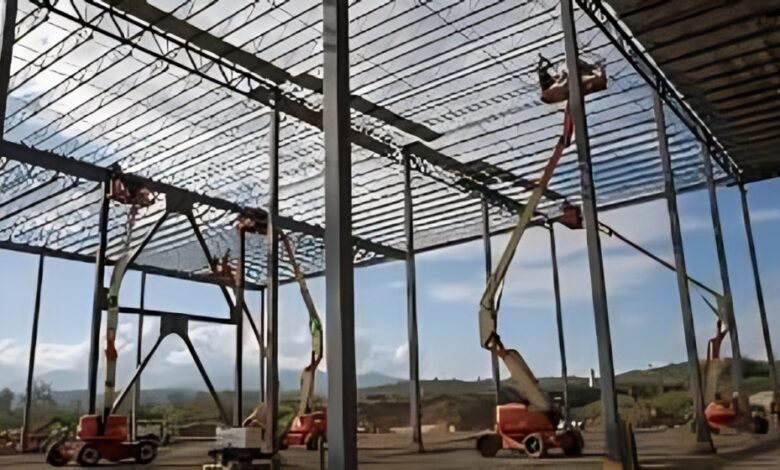
From towering skyscrapers to advanced aerospace components, the demand for materials that offer superior strength without adding excess weight has never been higher. Engineers and designers are constantly pushing the boundaries of what’s possible, and high-strength materials are the key to unlocking new levels of performance, efficiency, and safety. These materials are not just stronger; they are engineered to withstand extreme conditions, from intense heat and corrosive chemicals to immense physical stress.
Understanding the properties and applications of these advanced materials is crucial for anyone involved in industrial design, engineering, or manufacturing. This guide will explore the most significant high-strength materials used today, highlighting their unique characteristics and the pivotal roles they play in shaping our modern world. We will look at metals, composites, and ceramics that are driving innovation across various sectors.
The Powerhouse Metals: Steels and Alloys
When we think of strength, steel is often the first material that comes to mind. For centuries, it has been the backbone of construction and industry. Modern advancements, however, have led to the development of high-strength steels and superalloys that offer performance capabilities far beyond traditional iron and carbon mixtures.
High-Strength Steels
High-strength low-alloy (HSLA) steels are a major category, providing significantly better mechanical properties than conventional carbon steels. They are engineered to have higher tensile strength and greater resistance to corrosion. This is achieved by adding small quantities of alloying elements like chromium, nickel, molybdenum, and vanadium.
These steels are essential in the automotive industry, where they help create lighter, more fuel-efficient vehicles that still meet stringent safety standards. In construction, they allow for longer bridge spans and taller buildings without the need for excessively bulky support structures.
Titanium Alloys
Titanium is renowned for its exceptional strength-to-weight ratio, which is the highest of any metallic element. It is also incredibly resistant to corrosion, even from seawater and chlorine. These properties make titanium alloys indispensable in the aerospace industry, where they are used for airframes, engine components, and landing gear.
Beyond aviation, titanium finds applications in high-performance sports equipment, medical implants like joint replacements and dental fixtures, and chemical processing plants where resistance to aggressive chemicals is paramount.
The Composite Revolution
Composite materials are engineered by combining two or more constituent materials with significantly different physical or chemical properties. The resulting material is stronger and more versatile than the individual components. Fiber-reinforced polymers (FRPs) are among the most common and impactful composites.
Carbon Fiber Composites
Carbon Fiber Reinforced Polymer (CFRP) is a prime example of a high-performance composite. It consists of extremely strong carbon fibers embedded in a polymer matrix, such as epoxy. The result is a material that is incredibly lightweight, stiff, and strong.
CFRP is a go-to material for applications where weight is a critical factor. It’s used extensively in Formula 1 race cars, high-end cycling frames, and modern aircraft like the Boeing 787 Dreamliner. Its ability to be molded into complex shapes also provides significant design freedom.
Fiberglass Composites
Another widely used composite is made from glass fibers. When woven into a fiberglass fabric and combined with a resin, it creates a material that is strong, lightweight, and resistant to corrosion and chemicals. While not as stiff or strong as carbon fiber, it offers an excellent balance of performance and cost-effectiveness.
You can find fiberglass composites in boat hulls, automotive body panels, wind turbine blades, and storage tanks. Its versatility and durability make it a staple in numerous industrial sectors.
Advanced Ceramics: Built for Extremes
When it comes to handling extreme temperatures and harsh environments, advanced ceramics are often the materials of choice. Unlike traditional ceramics used in pottery, technical ceramics are highly engineered to deliver exceptional performance under stress.
Silicon Carbide (SiC)
Silicon carbide is known for its outstanding hardness, high-temperature stability, and excellent resistance to wear and corrosion. It maintains its strength at temperatures up to 1,400°C (2,550°F), making it suitable for applications like car brakes, clutches, and plates for bulletproof vests. It’s also used in the semiconductor industry due to its unique electronic properties.
Zirconia (ZrO2)
Zirconia, sometimes called “ceramic steel,” possesses remarkable fracture toughness, which is unusual for a ceramic. It is highly resistant to wear and corrosion and has low thermal conductivity. These properties make it ideal for producing cutting blades, dental implants, and bearings that operate in demanding environments.
Building the Future
The evolution of high-strength materials is a continuous journey. As industries demand lighter, stronger, and more durable components, researchers are developing new alloys, composites, and ceramics to meet these needs. These materials are not just improving existing products; they are enabling entirely new technologies. By harnessing the unique properties of these advanced materials, we can build a more efficient, sustainable, and resilient future. The next time you see a modern marvel of engineering, consider the incredible materials that make it all possible.